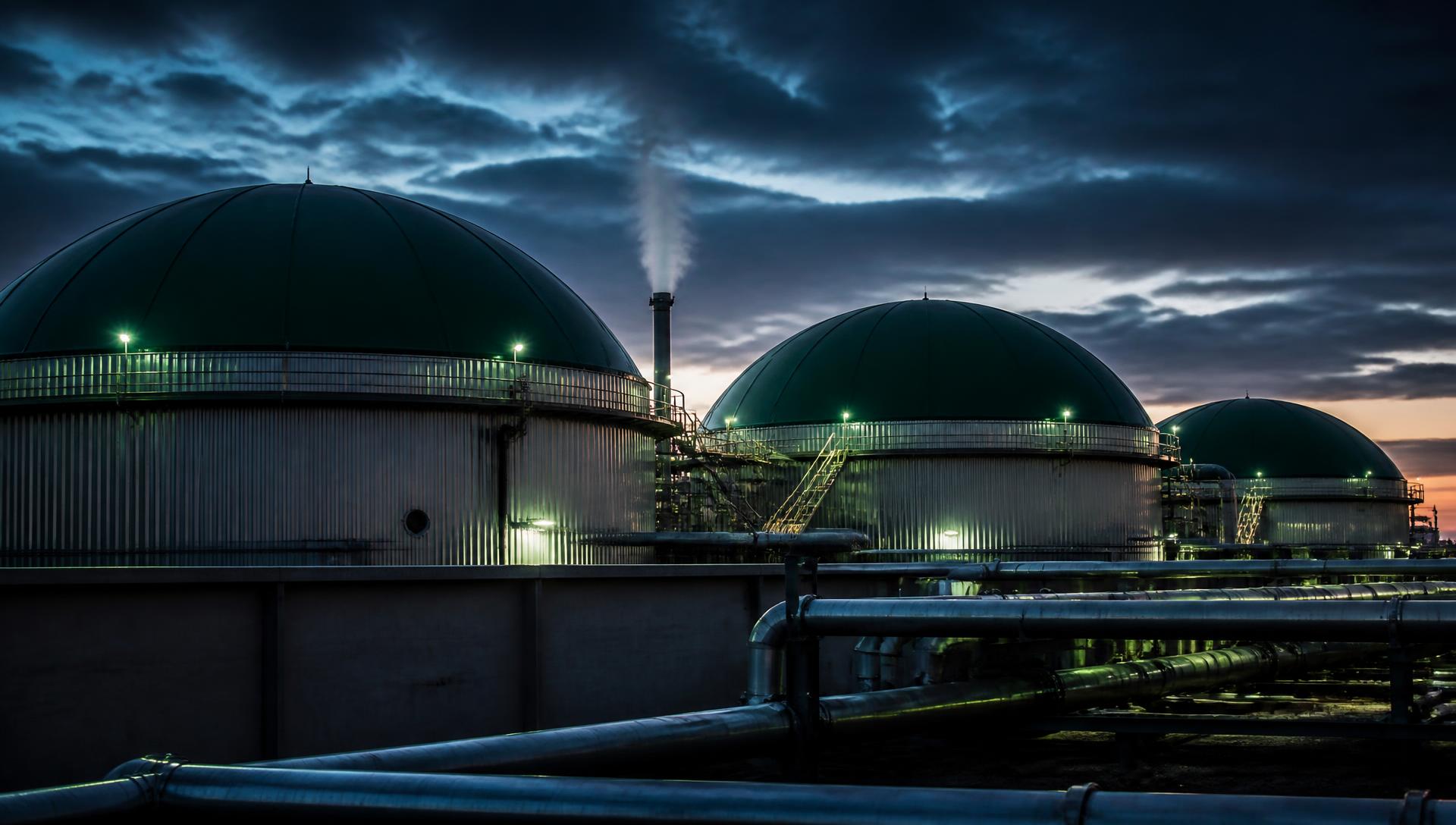
Intelligent pretreatment for anaerobic digestion
More energy from the same feedstock.
CatalystIQ combines feedstock intelligence and engineered biology to help existing anaerobic digestion plants improve conversion and unlock more value from diverse and changing feedstocks, without replacing the digester.
- Independently validated
- Patent pending
- VC-backed
- £1.2m+ non-dilutive backing
- Working prototype
The problem
Variable feedstock. Static treatment. Lost potential.
Anaerobic digestion plants process feedstocks that change from load to load, yet treatment strategies are not always able to respond with the same precision. This can leave valuable organic material under-converted and limit the performance of existing infrastructure.
Changing feedstock
Composition and conversion behaviour can vary significantly between incoming loads.
Incomplete conversion
Complex organic material is not always made sufficiently accessible before entering the digester.
Limited responsiveness
Fixed treatment strategies and delayed testing cannot always respond effectively to changing conditions.
How it works
A performance layer for the plant you already own.
CatalystIQ analyses incoming feedstock, identifies its conversion state and selects an appropriate pretreatment strategy before the material enters the digester.
- 01
Analyse
Characterise each load in line and identify its material profile and conversion state.
- 02
Select
Match that profile to a treatment programme from our in-house engineered-biology library.
- 03
Pretreat
Apply the required engineered biology upstream of digestion.
- 04
Optimise
Use measured plant response to improve future treatment decisions.

CatalystIQ is designed to respond to feedstock variation rather than apply the same treatment programme to every load.

Sensing and matching
Recognise the load. Match the treatment.
CatalystIQ characterises each incoming load in line, infers how the material is likely to behave in digestion, and selects a matched treatment from Potenix's proprietary engineered-biology library. The sensing stack, recognition models and biological formulations are proprietary and are not described publicly.
- LAYER
In-line characterisation
Incoming material is characterised as it moves through reception, without manual sampling.
- LAYER
Recognition layer
Signals are combined into a material profile and a likely conversion state.
- LAYER
Treatment selection
The profile is mapped to a matched programme from our in-house library.
- LAYER
Closed-loop learning
Downstream performance feeds back to refine future selections.
Each recognised profile is mapped to a treatment programme designed in house for that class of material — selected per load rather than applied uniformly.
Sensing methods, recognition models and biological formulations are proprietary and patent pending. Nothing on this page describes our approach in detail; specifics are shared privately under confidentiality.
Engineered biology
Biology does the work. Hardware and software point it at the right target.
CatalystIQ is a biology platform first. Potenix designs and develops its own engineered biology in house, then uses sensing and learning to apply the right biology to the right material at the right time. The hardware carries it; the software aims it; the biology breaks the material down.
- Development
- In-house engineered biology
- Library
- Multiple material-class programmes
- Iteration
- Continuous development cycles
- IP posture
- Patent pending, trade secret
- 01
Designed in house
Potenix develops its own engineered biology internally rather than buying a generic off-the-shelf product.
- 02
A working library
Distinct biological programmes are developed for distinct classes of organic material.
- 03
Matched, not averaged
A programme is selected for each load instead of applying one fixed treatment to everything.
- 04
Improved by deployment
Measured plant performance guides which programmes are refined and developed next.
Potenix does not publish the composition, mechanism or development route of its engineered biology. Technical detail is shared privately with qualified parties under confidentiality.
Outcomes
Unlock more from existing infrastructure.
These are the intended benefits of intelligent pretreatment. Actual results depend on the plant, the feedstock and the trial configuration.
- More energy
- Make more of the existing feedstock accessible for conversion.
- More consistent performance
- Respond more intelligently to changing feedstock and operating conditions.
- More effective capacity
- Address upstream conversion bottlenecks without immediately building another digester.
Evidence
Measured performance. Independently validated.
Controlled testing has demonstrated measurable improvements in biological activity and biomethane potential. Detailed technical results are available privately to qualified customers, partners and investors.
Request Technical InformationValidation pathway
Controlled testing
Independent validation
Working prototype
Real-site deployment
Controlled testing establishes technical potential. Actual plant performance depends on feedstock, plant design, baseline performance, operating conditions and trial configuration.
Deployment
Designed for the plant you already own.
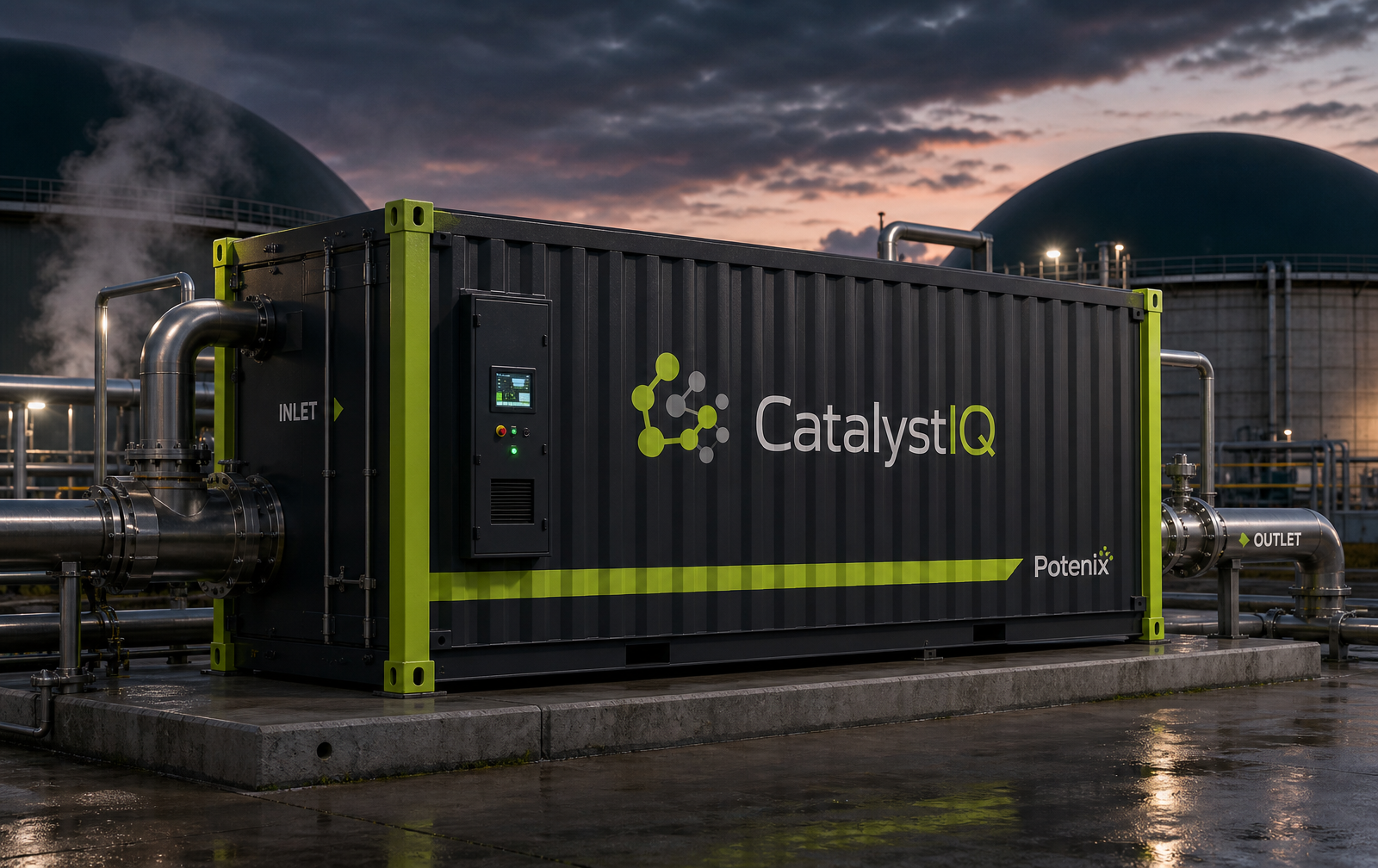
CatalystIQ is being developed as a modular pretreatment layer positioned upstream of existing anaerobic digestion infrastructure.
Feedstock reception
CatalystIQ pretreatment
Existing digester
Energy output
- 01
Craned onto a pad
Half a day on site
- 02
Quick-connect to feed line
No digester works
- 03
Runs inline
Monitored remotely
- 04
Uncoupled and lifted out
Removable, relocatable
- Retrofit-first architecture
- Modular pretreatment and application
- Designed for existing control-system integration
- Site-specific validation and deployment
For operators
Start with your plant, feedstock and operating priorities.
Every plant is different. Potenix begins with a confidential assessment of the feedstock, existing infrastructure, operating baseline and commercial objective.
Assess
Understand the plant, feedstock and current operating challenge.
Validate
Agree a controlled comparison and the relevant technical and commercial measurements.
Deploy
Introduce the appropriate CatalystIQ configuration and evaluate measured performance.
Commercial progress
Moving from validation into deployment.
01
Platform developed
02
Working prototype built
03
Performance independently validated
04
Patent application filed
05
Asset-owner agreements secured
06
Real-site deployment progressing
Investors
A scalable platform for existing AD infrastructure.
Potenix combines engineered biology, intelligent pretreatment and a retrofit commercial model. The company is currently closing its pre-seed financing round and progressing into real-site deployment.
Investor Enquiries- Retrofit rather than replacement
- Recurring engineered-biology model
- Intelligent software and control layer
- Defensible technology and deployment knowledge
- Agreements with major AD asset owners
What could your feedstock produce?
Speak with Potenix about a confidential feedstock assessment, controlled site trial or strategic partnership.